Center Certification & Testing International
The "CE" mark is a safety certification mark, which is regarded as a passport for manufacturers to open and enter the European market. CE stands for European Unity (Conformite Europeenne). In the EU market, the "CE" mark is a mandatory certification mark. Whether it is a product produced by an enterprise within the EU or a product produced in other countries, if it wants to circulate freely in the EU market, it must be affixed with the "CE" mark to indicate that the product meets the basic requirements of the EU's "New Approach to Technical Harmonization and Standardization" directive. This is a mandatory requirement for products imposed by EU law.
CE certification provides unified technical specifications for products from various countries to trade in the European market and simplifies trade procedures. Products from any country must undergo CE certification to enter the EU and the European Free Trade Area, and affix the CE mark to the product. Therefore, CE certification is a pass for products to enter the EU and European Free Trade Area markets.
1. Obtaining a CE certification certificate issued by an EU designated agency can maximize the trust of consumers and market supervision agencies;
2. In the event of litigation, the CE certification certificate issued by an EU designated agency will become legally binding technical evidence;
3. It can effectively avoid three major risks:
(1) The risk of being detained and investigated by customs;
(2) The risk of being investigated by market supervision agencies;
(3) The risk of being accused by peers for competitive purposes.
CE certification divides various directives according to different functional uses. Common ones are:
1. EMC (Electromagnetic Compatibility 2014/30/EU) Directive;
2. RED (Radio Equipment 2014/53/EU) Directive;
3. LVD (Safety Regulations 2014/35/EU) Directive.
Ordinary electronic products, home appliances, etc. basically follow these three directives for CE certification. Products without wireless functions follow LVD or EMC directives, and products with wireless functions need to add RED directives.
The scope of CE certification is very wide. Generally speaking, most products exported to the EU need CE certification. Electronic products and toys exported to Europe are required to have CE certification, such as:
Power supply: communication power supply, charger, display power supply, LCD power supply, UPS, etc.;
Lighting: chandeliers, track lights, garden lights, portable lights, downlights, light strings, table lamps, grille lights, aquarium lights, street lights, energy-saving lamps, T8 lamps, etc.;
Home appliances: fans, electric kettles, stereos, televisions, mice, vacuum cleaners, etc.;
Electronics: earplugs, routers, mobile phone batteries, laser pens, vibrators, etc.;
Communication products: telephones, wired telephones and wireless main and auxiliary machines, fax machines, answering machines, modems, data interface cards and other communication products.
Wireless products: Bluetooth BT products, wireless keyboards, wireless mice, wireless readers, wireless transceivers, wireless microphones, remote controls, wireless network devices, wireless image transmission systems and other low-power wireless products;
Wireless communications: 2G mobile phones, 3G mobile phones, 3.5G mobile phones, DECT mobile phones (1.8G, 1.9G frequency bands), etc.;
Machinery: gasoline engines, electric welders, CNC drilling machines, tool grinders, lawn mowers, washing equipment, bulldozers, lifts, punching machines, dishwashers, water treatment equipment, gasoline welding machines, printing machinery, woodworking machinery, rotary drilling rigs, mowers, snow blowers, excavators, printing machines, printers, cutting machines, road rollers, trowels, brush cutters, hair straighteners, food machinery, lawn mowers, etc.;
Medical equipment and toys, etc.
Common electronic and electrical products include:
Low Voltage Directive: Home Appliances, IT/AV Products, Lighting Products, etc.
Electromagnetic Compatibility Directive: Home Appliances, IT/AV Products, Lighting Products, etc.
Machinery Directive: All Related Products
Radio Frequency and Communication Terminal Equipment Directive: Wireless or Communication Terminal Products
1. The applicant company fills in the application form and provides information, application form, product manual and technical documents.
2. The agency evaluates the CE certification inspection standards and CE certification inspection items and quotes.
3. The applicant company confirms the project and sends samples.
4 The laboratory arranges product testing and reviews and evaluates the integrity of technical documents.
5 After the product test meets the requirements, the product test report or technical construction document is provided to the applicant company, and the CE certificate is issued after the test passes.
6. The applicant company signs the CE guarantee self-declaration and affixes the CE mark on the product.
1. Application Form;
2. User Manual;
3. RF Specifications;
4. Product Label;
5. RF Test Mode (only Bluetooth, Wi-Fi, Zigbee, 2.4GHz and other wireless technologies require fixed frequency);
6. CDF.
The cost of CE certification is mainly related to the product and the selected agency, and whether it is expedited will also affect the quotation.
In addition to different quotations from different agencies, the cost is also related to the product itself. For example, ordinary products without RF only need to test EMC. Wireless products (Bluetooth, WIFI, 4G, etc.) need to test a large number of radio and telecommunications instructions in addition to the EMC part, which will undoubtedly increase the cost.
General CE certification costs for electronic products:
· Ordinary low-voltage products, the charge is relatively low;
· Ordinary high-voltage products, the charge ranges from several thousand yuan;
· Wireless products, the charge is relatively high, generally ranging from several thousand to tens of thousands.
CE certification processing period for electronic products
7-10 working days for ordinary products.
About 3 weeks for wireless products.

Australian RCM certification
Label printers entering the Brazilian market, ANATEL certification is an essential passport! It is the recognition of the Brazilian Telecommunications Authority for the safety and compliance of electronic products, without which products cannot be legally sold.
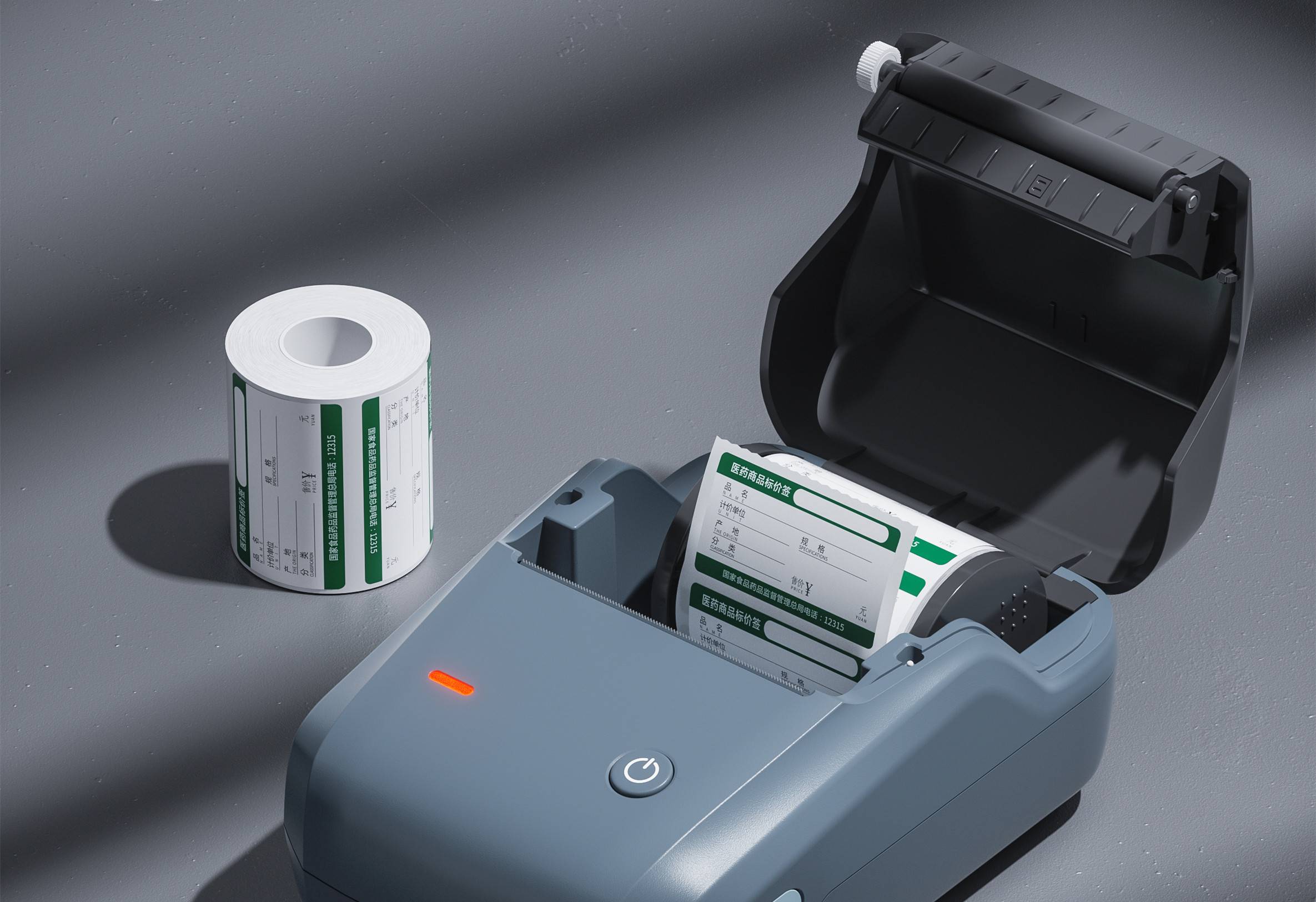
SRRC certification is not only a guarantee of product compliance, but also a key to opening up the market.
CE, abbreviated from the French \"Communate Europpene\", is the meaning of the European Community, referred to as the European Union. The CE mark is a legally mandatory mark in the EU market. Whether it is a product produced by an enterprise within the EU or a product produced by another country, if it is to be circulated freely in the EU market, it must be affixed with the CE mark to show that the product complies with the European Union\'s \"New Approach to Technology Coordination and Standardization\" (The New Approach to technical harmonization and standardization).
Get a quote

Tik Tok